New Updates in Digital Marketing (2025–2026)
Digital marketing is evolving rapidly as new technologies, platforms, and consumer behaviors reshape how brands connect with audiences. In 2025 and 2026, the industry has seen major updates driven mainly by artificial intelligence, automation, and changes in search and social media platforms. Businesses that stay updated with these changes can gain a strong competitive advantage in the digital marketplace.
1. AI is Becoming the Core of Digital Marketing
Artificial Intelligence is now the biggest driving force behind modern marketing strategies. AI tools help marketers analyze large amounts of data, automate campaigns, and create personalized experiences for customers. Many companies are now using AI to generate content, optimize ads, and predict customer behavior.
For example, marketing platforms are introducing AI-powered automation tools that can generate ad copy, choose target audiences, and optimize campaign budgets automatically. These systems allow marketers to focus more on strategy rather than manual work.
In addition, the concept of “agentic AI marketing” is emerging, where AI agents can manage entire marketing workflows, from campaign creation to performance optimization.
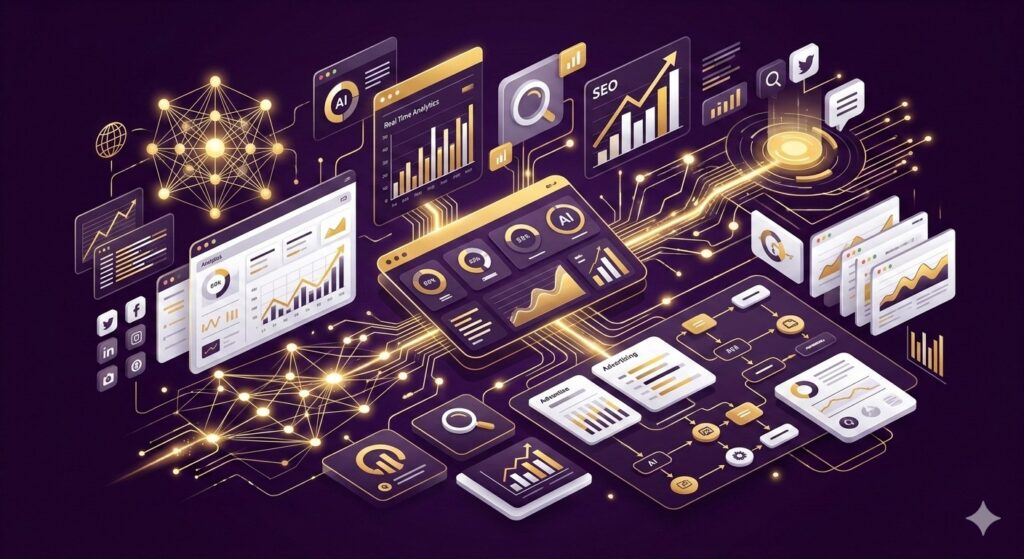
2. AI-Powered Search Is Changing SEO
Search engines are evolving beyond traditional keyword-based results. AI-generated answers and summaries are now appearing directly in search results. This means users can get information without clicking multiple websites.
Because of this shift, marketers are focusing more on structured data, content authority, and AI-friendly content formats so their websites can be cited in AI-generated search responses.
This new approach is sometimes called AEO (Answer Engine Optimization), where content is optimized to appear in AI answers instead of only ranking on traditional search pages.
3. Automation in Advertising Platforms
Advertising platforms like Google and Meta are moving toward fully automated advertising systems. AI now helps create ad variations, target audiences, and optimize bids automatically.
Google is developing more AI-driven advertising systems that automate campaign management and improve performance with less manual work.
At the same time, social media platforms are introducing tools that can generate entire advertising campaigns automatically using AI technology.
These updates make advertising more accessible for small businesses while improving efficiency for large brands.
4. Short-Form Video Dominates Digital Content
Short-form videos continue to dominate digital marketing across platforms such as TikTok, Instagram Reels, and YouTube Shorts. These formats capture attention quickly and encourage higher engagement.
Brands are increasingly using short videos for product demonstrations, educational content, and storytelling. Studies show that audiences prefer fast, engaging content that delivers value within seconds.
As a result, many marketers now prioritize video-first content strategies.
5. Rise of Creator and Community Marketing
Consumers today trust creators and influencers more than traditional advertisements. Creator marketing has become one of the fastest-growing strategies in digital marketing.
Younger audiences especially want to participate in brand stories rather than just watch them, which has led to more collaborations between brands and creators.
This shift has also increased the importance of user-generated content and community-driven marketing campaigns.
6. Hyper-Personalization in Marketing
Personalization is becoming more advanced with the help of AI and data analytics. Marketing platforms now analyze user behavior, interests, and past interactions to deliver highly personalized content and advertisements.
For example, social media platforms are starting to use interactions with AI tools to personalize ads and content recommendations for users.
This approach helps brands deliver more relevant messages and improve customer engagement.
7. AI-Generated Advertising and Creative Content
AI-generated marketing content is becoming more common. Some brands are even experimenting with fully AI-generated advertisements, showing how quickly creative production is evolving in the industry.
AI tools can now generate video ads, images, social media posts, and marketing copy within minutes. This reduces production time and allows marketers to test multiple creative variations quickly.
Conclusion
Digital marketing is entering a new era where AI, automation, and personalization are reshaping how brands interact with customers. Search engines are becoming more AI-driven, advertising platforms are automating campaign management, and short-form video content is dominating online engagement.
For businesses and marketers, staying updated with these trends is essential. Companies that adopt AI-powered tools, focus on personalized experiences, and create engaging digital content will be better positioned to succeed in the evolving digital landscape.
As technology continues to advance, digital marketing will become more data-driven, automated, and customer-focused than ever before.
Popular Articles

AI Is Changing SEO: What Businesses Must Do Now

The Best Social Media Platforms for Business Growth

10 Digital Marketing Mistakes Local Businesses Make